





Planning appeal summaries 2025
Contents |
Ref: 3353206
The Old Southern Railway Stables in the London Borough of Southwark is a locally listed building and a non-designated heritage asset. The applicant wishes to renovate and extend the existing building for residential and commercial use. The inspector concluded that the design of the extension would have an unsympathetic form, scale and bulk, making it intrusive and overbearing on the host building and street scene. Dismissed.
Refs: 3355509 and 3355508
These appeals relate to a refusal of listed building consent and advertisement consent for the installation of logo signs on a listed Regency jewellers shop in Cheltenham. The signs proposed would be externally illuminated through halo lighting and constructed of red plexiglass Perspex, with an internally illuminated clock face. The inspector concluded that the halo-lit logo signs would create a bright brash appearance when lit, which would appear incongruous against the traditional materials of the listed building, and that the steel clock with white clockface and gold numbering, projecting some 0.9 metres from the building, would appear bulky. This would appear out of place with the refined features and subdued colours of the listed building and other buildings in the conservation area. Both appeals dismissed.
Ref: 3358638
An inspector allowed an appeal for the installation of ensuite bathrooms to guest bedrooms on the fourth floor of a listed building designed by Ernest George and Harold Peto, and built for the dramatist WS Gilbert of Gilbert and Sullivan. The fourth floor was a narrow area under the apex of the roof between the front and rear gables, accessed by a tight staircase. The inspector concluded that the insertion of ensuites would not harm the simple cellular layout nor affect its social hierarchy. Allowed.
Ref: LBA-1702021
The removal of bells from a redundant church in Holywood, Galloway, Scotland, was refused by a reporter on the basis that the bells were an intrinsic part of the Category B listed building, and their removal would harm its significance. Dismissed.
Ref: 3319608
This appeal related to a 74-page listed building enforcement notice for the excavation of basement floors to a listed building in Westminster, London. The Grade II-listed host dwelling, dating to 1729, comprises three floors with a basement. The appellant inserted a further basement to accommodate a gymnasium, sauna, bathroom, cinema and storage, and changed the levels of the existing basement. The inspector concluded that the unauthorised alterations to the listed building resulted in harm to the special interest (significance), with very limited public benefits. Dismissed.
Ref: 3351431
This appeal relates to an application for 177 apartments for multi-generation living, including open-market, affordable and retirement housing. The application was refused on heritage and flooding grounds. The appeal site was adjacent to a conservation area, and within the setting of many listed buildings and non-designated heritage assets. Historic England objected to the scheme on the basis the design was unsympathetic. It preferred a development that would follow the scale, finer grain and form of the development exhibited by the buildings adjacent to it within the conservation area. The inspector disagreed and stated that it would revitalise a derelict piece of unattractive industrial land. The previous development on the site, the inspector said, was not part of a historic development pattern, and a contrasting form and scale would not necessarily be significantly out of scale, incongruous or unattractive. Allowed.
Ref: LBA-140-2017
This appeal related to the unauthorised installation of replacement windows in a Grade A-listed building in Walkerburn, Scottish Borders. The reporter described the scheme as having stick-on astragals, heavy frames and trickle vents, and concluded that they would not preserve the listed building or its features of architectural or historic interest. Dismissed.
Ref: CAS-03710-X8S2k6 and CAS-03714-C8B6W6
This appeal relates to a proposal for three new terraced dwellings, and the rebuilding of a barn and its conversion to a dwelling, in Powys, Wales. The main issue was the impact on the setting of an adjacent listed building, Ivy House, a late Georgian house with cobbled courtyard and outbuildings, which is enclosed by a stone wall extending along the access driveway. Although the inspector stated that the proposed design of the new buildings would be in keeping with the listed building, the widening of the access road and demolition of part of the wall, which is attached to the listed building, would harm the significance of the listed building. Dismissed
This article originally appeared in the Institute of Historic Building Conservation’s (IHBC’s) Context 184, published in September 2025. It was written by Alexandra Fairclough, a member of the IHBC law panel and a barrister (non-practising). She teaches heritage law at Manchester School of Architecture, and is principal built heritage and design officer at Bolton Council.
--Institute of Historic Building Conservation
Related articles on Designing Buildings Conservation.
IHBC NewsBlog
IHBC sponsors Gardens Trust event 23-4 Sept 2026
.jpeg)
'Learning from the Past, Shaping the Future’ takes place in Milton Keynes
Renovations to Frank Lloyd Wright's Fallingwater complete
.jpg)
World Heritage Preserved project opens house for tours again
Shakespeare Birthplace Trust places Hall's Croft on HAR Register
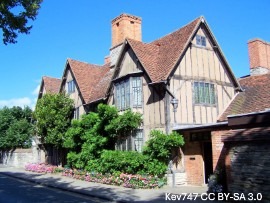
Stratford-upon-Avon home of Shakespeare's daughter is 'At Risk'
Lady Grange’s House repaired on St Kilda
.jpg)
National Trust for Scotland repairs stone cleit with link to famous island resident
Griff Rhys Jones on BBC Radio 4 Today programme
,_Green_Lane,_Derby.jpg)
The Victorian Society’s President unveiled its latest Top Ten Endangered Buildings 2026.
Need a MATE? Book your place now.

IHBC offers free webinars on applying for IHBC accreditation (Full & Associate).
UK Stained Glass Repository finds windows new homes
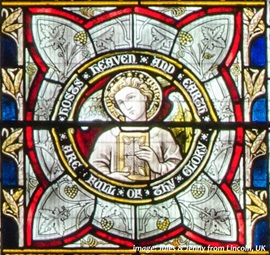
How are stained glass windows are rescued, stored and repurposed?
APPGEBE report sets high aims for quality
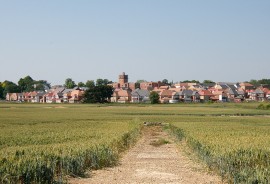
'Government must not sacrifice quality in drive to build 1.5m homes'
New measures protect Historic Shipwrecks from heritage crime

Underwater cultural heritage benefits from new HE guidance
How could the City of London skyline look in 6 years' time?

Visualisation shows approved planning applications as completed buildings
National Trust for Scotland calls for VAT cuts
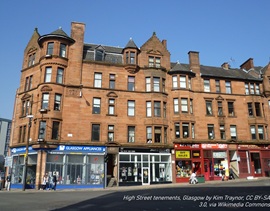
Heritage neglect is encouraged by current policies
IHBC's 'Context' Issue 186 features Industrial Heritage
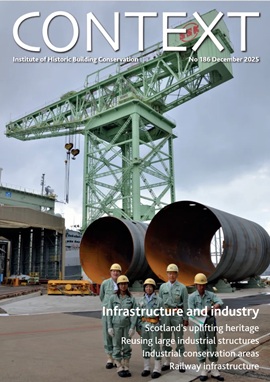
IHBC's members' journal reports on the challenges of conserving infrastructure
Book now for IHBC Annual School 2026
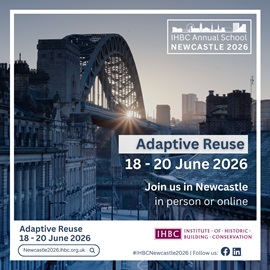
IHBC Annual School is taking place 18-20 June 2026 in Newcastle
RICHeS Research Infrastructure offers ‘Full Access Fund Call’

RICHeS offers a ‘Help’ webinar on 11 March
Latest IHBC Issue of Context features Roofing
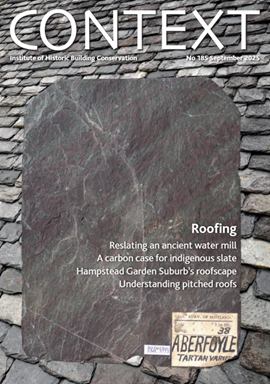
Articles range from slate to pitched roofs, and carbon impact to solar generation to roofscapes
Three reasons not to demolish Edinburgh’s Argyle House

Should 'Edinburgh's ugliest building' be saved?
IHBC’s 2025 Parliamentary Briefing...from Crafts in Crisis to Rubbish Retrofit
IHBC launches research-led ‘5 Commitments to Help Heritage Skills in Conservation’
How RDSAP 10.2 impacts EPC assessments in traditional buildings

Energy performance certificates (EPCs) tell us how energy efficient our buildings are, but the way these certificates are generated has changed.